
 Rating 6/10
The fact that a serial killer was a contestant on a game show is an unsettling example of truth being stranger than fiction. The appearance occurred during his horrific string of killings and remains one of the darkest oddities in television history. Woman of the Hour shines a spotlight on this shameful chapter, but it doesn’t go far enough.
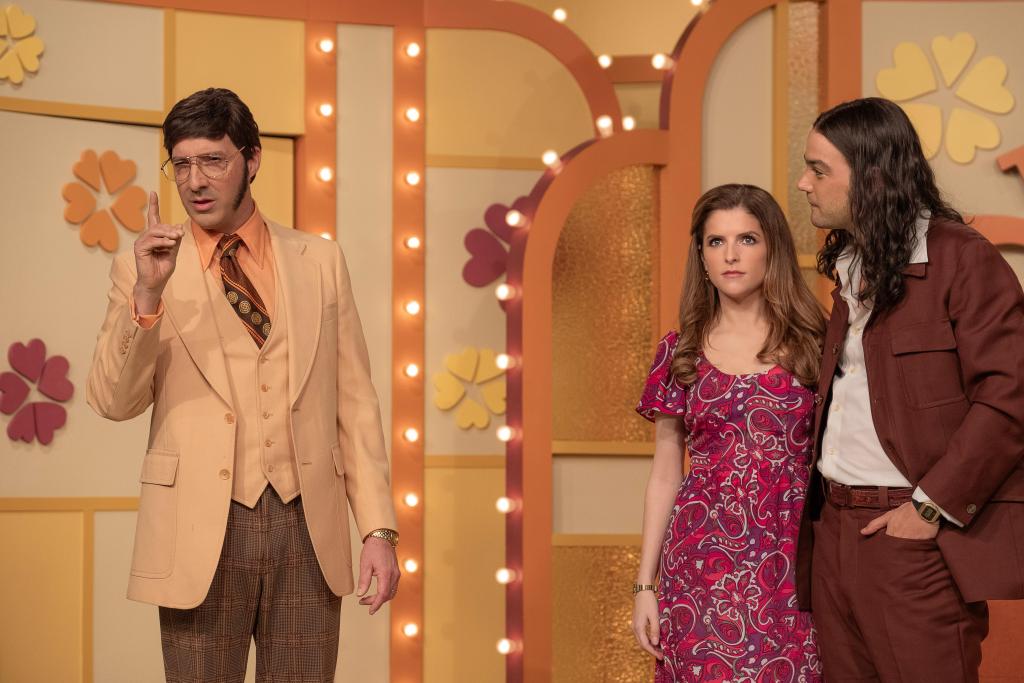
Sheryl Bradshaw (Anna Kendrick) is an aspiring actress in 1978 Hollywood. She reluctantly agrees to go on The Dating Game to boost her career. Unbeknownst to her, one of the bachelors is Rodney Alcala (Daniel Zovatto), a charming yet dangerous serial killer who targets victims from New York to California. These include Sarah (Kelley Jakle), a young woman from Texas; Charlie (Kathryn Gallagher), a female flight attendant; and Amy (Autumn Best), a 15-year-old runaway.
The film intertwines Sheryl’s experience on the program with flashbacks to Alcala’s previous crimes, portraying how he masked his evil nature with a seemingly respectful and cultured facade. He distinguishes himself as an exception in a sea of male chauvinists. The emphasis goes beyond Alcala’s homicides but on the systemic misogyny that allowed him to remain at large for so long.
The directorial debut of actress Anna Kendrick (Pitch Perfect, Twilight) is inspired by a true story. This highly fictionalized account from writer Ian McDonald is told from the perspectives of the victims. The real Cheryl (with a C) Bradshaw remains somewhat of a mystery, so her personality is largely fabricated here. However, we do know that after the broadcast, Cheryl wisely canceled going on that prize date. Alcala was confirmed to have killed at least eight people, though authorities suspect his actual victim count could be as high as 130.
The film focuses not on explaining the procedural failings that allowed Alcala to continue but on holding a sexist culture responsible for his unchecked violence. Aspiring actress Sheryl is shown as objectified from the start—first at an unrelated audition and then as she is judged to be on The Dating Game. She is reduced to a mere commodity, valued solely for her looks rather than her talent or individuality, underscoring the film’s critique of the pervasive oppression of women.
It is bewildering that Alcala appeared on television while in the middle of a murder spree. Even more unfathomable, despite being arrested and incarcerated multiple times, he was repeatedly released. How could something like this happen? Woman of the Hour touches upon the true crime but leaves out important facts. This raises many questions.
Alcala’s spot on a popular TV quiz program was partly due to the minimal background checks that game shows conducted on contestants back then. Additionally, the police lacked the centralized databases and communication systems that might have stopped Alcala’s cross-state murders. Early errors in handling evidence and judicial procedures contributed to his repeated discharges from jail. The movie doesn’t cover any of these failures so it falls short of being an in-depth exploration. Still, the narrative is a compelling and disturbing saga rooted in actual events. It highlights one of the most shocking miscarriages of the criminal justice system.
10/23/24
2 Responses
I appreciate your point of view. However, the film did not pretend to be about why a serial killer could continue on a crime spree despite being arrested several times. It was focused on the male gaze and entitlement. The power of men (and this man in particular) to ingraciate, intimidate and impact women’s lives. There are plenty of predurals that look at how the system allows criminals to continue to commit crimes. David Fincher’s Zodiak is an especially fine example.
I appreciate your take, and I can appreciate the focus. However, I think other films have explored this theme with greater depth and impact. For example, Eyes Wide Shut delves into male entitlement and objectification in a high-society context, while American Psycho presents a biting satire of male vanity, privilege, and the commodification of women. Additionally, Blue Velvet explores how male entitlement can warp perceptions of love and power.