
 Rating 5/10
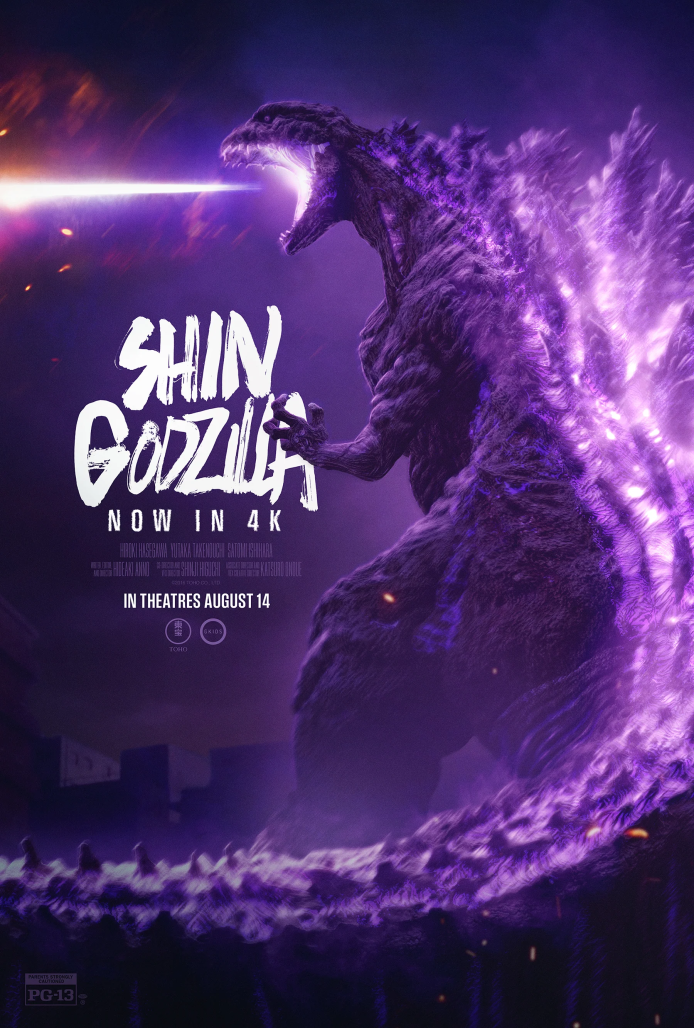
Shin Godzilla is back on the big screen! This time with a 4K restoration, courtesy of GKIDS, the distributor now handling Toho’s beloved monster in North America. The word “Shin” can mean three different things in Japanese: “new,” “true,” or “god,” which reflects the intent to both reimagine and redefine the reptilian terror for the modern era. Originally released in 2016, the film is now presented with improved visual clarity, offering audiences another look at this radical take..
The story begins when a strange disturbance erupts in Tokyo Bay that is initially mistaken for a natural disaster. Administrative officials scramble to assess the situation, debating its cause. Their uncertainty is soon resolved as a massive creature surfaces. From there, the Japanese government must coordinate a response as the situation escalates. The key figures include Rando Yaguchi (Hiroki Hasegawa), a sensible Deputy Chief Cabinet Secretary who grows frustrated with procedural delays. He clashes with Hideki Akasaka (Yutaka Takenouchi), the Prime Minister’s aide, who serves as the voice of official protocol. Kayoko Ann Patterson (Satomi Ishihara) is a Japanese-American envoy who balances U.S. interests with Japan’s sovereignty. Prime Minister Seiji Okochi (Ren Osugi) is a leader paralyzed by conflicting counsel.
The setup promises monster mayhem. Yet, the focus is more on bureaucracy than the creature itself. Nearly every person who speaks is introduced with an on-screen subtitle listing their full job title, often comically long. You’d have to take notes to keep track. These cards pile up quickly, and with so many characters weighing in, it emphasizes the absurdity of the process. The film serves as a satire of governmental inefficiency, exposing how systems collapse under red tape. Japanese audiences recognized it as a critique of their administration’s slow response to the 2011 Tōhoku earthquake, tsunami, and Fukushima nuclear disaster. However, the point is made within the first 20 minutes and then restated through an endless parade of meetings.
A great Godzilla movie isn’t measured by how much we see the monster; it’s about the human drama that fills the spaces between appearances. Sure, governmental meetings have always been a component, but they don’t comprise the bulk of the drama. The 1954 original found genuine emotion with Dr. Serizawa’s moral dilemma and his relationship with Emiko. Later entries leaned on different personal conflicts. Scientists pushing experiments too far, families caught in the chaos, and even alien invasions. Here, policy debate is the center of the saga, but that narrative grows tiresome. Instead of characters grappling with sacrifice, fear, or moral consequences, we watch policy debates that could have just as easily applied to an earthquake or tsunami. Godzilla is an excuse for endless discussions, rather than the catalyst for a human story.
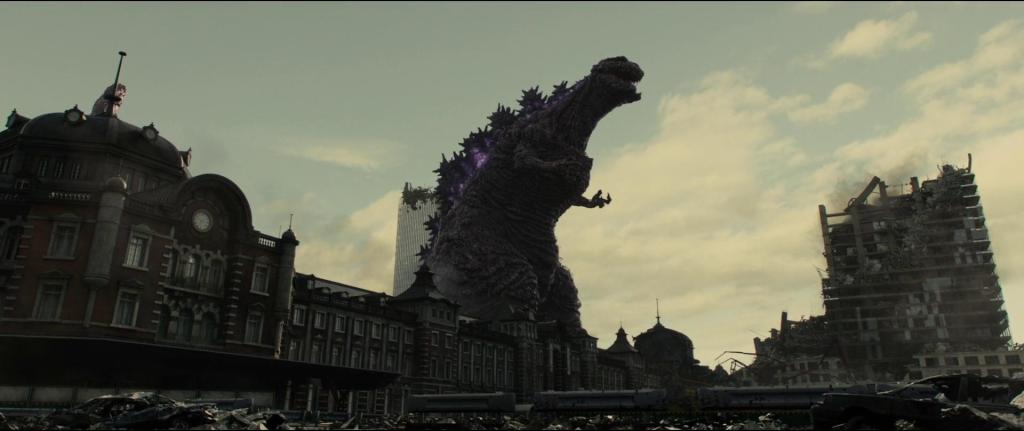
When the kaiju does appear, he doesn’t disappoint. The sequences are visually thrilling and frighteningly inventive. The creature evolves before our eyes into a towering symbol of destruction, and the attack sequences showcase the scale and terror Toho is famous for. Yet these moments, though appreciated, don’t drive the narrative. The boardrooms and cabinet chambers do. The account is 2 hours long, making it among the longest in the franchise. The failure of bureaucracy dominates that screen time. It’s during these moments that one realizes they could be discussing any natural disaster.
Godzilla’s appearances are often brief in the series, but the human drama is just as compelling. The original Godzilla (1954) demonstrated that substantial character stakes can sustain the story until the monster’s return. This commentary on bureaucracy is clever to a point, but it overstays its welcome. The characters fail to transcend their role as props to make a point. The beast may roar, but the sound of government officials endlessly talking about what to do next roars a lot louder.
08-14-25
2 Responses
The scene where Godzilla displayed his full power complete with a laser beam after a fire blast was very well done. Would have been more effective if it was used against a threat, but was still impressive. That’s it! The rest of the movie was filled with jabbering and titles. I couldn’t keep up, even to the point of eye resting. 😴 2 1/2 ⭐️
Agreed. The “atomic breath” scene, when Godzilla’s lower jaw splits to shoot a beam of fire, is the best scene in the film and one of the greatest in the franchise. It didn’t justify a 2-hour movie about governmental people talking in a room, though.