
 Rating 6/10
A 2001 memoir provides the foundation for actor Embeth Davidtz’s directorial debut. This is the world of author Alexandra “Bobo” Fuller as a seven year old, played by newcomer Lexi Venter. Through her narration, we see Rhodesia’s final years of white minority rule through a child’s eyes. Even the title, Don’t Let’s Go to the Dogs Tonight, suggests a child’s voice: a British idiom meaning “let’s not fall apart.” It is a plea to hold family and country together on the brink of collapse.
Bobo sees the world with the innocence of a child. Guns and ammunition, ever-present in the household, seem less like instruments of violence than part of the family’s daily routine. She helps reload bullets and slings a BB gun across her shoulder on the farm. Yet they’re also inescapable truths of the Bush War and the threat of guerrilla attacks. These register more as fragments of overheard conversation than as immediate danger. In the same way, she observes the anxiety between white settlers and African neighbors, the questions of land and belonging, and the stakes of the upcoming elections.
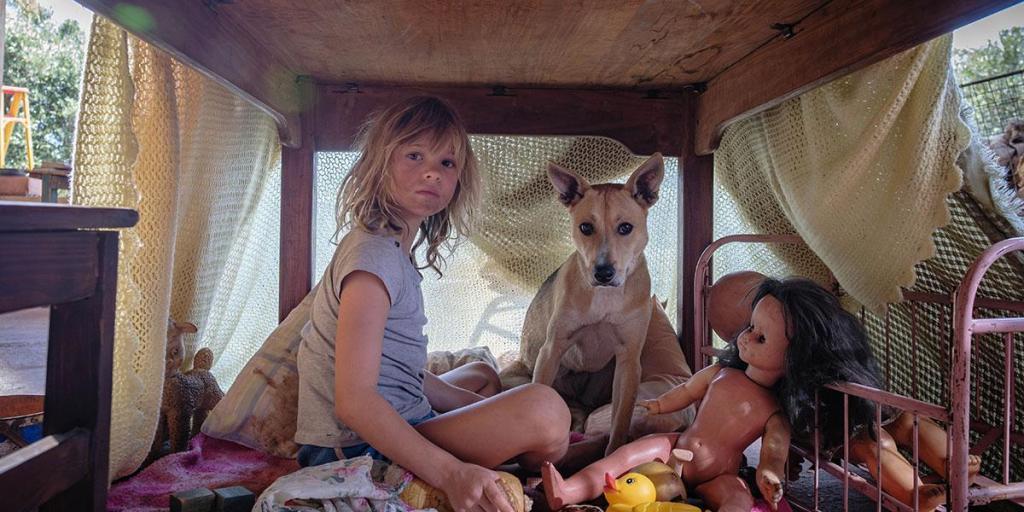
Set in 1980 in the Burma Valley, the narrative follows Bobo’s childhood on her family’s struggling farm. Her father, Tim (Rob Van Vuuren), is frequently absent as a member of the white militia. Meanwhile, her mother, Nicola (Embeth Davidtz), is consumed by the need to defend their land. Bobo navigates life primarily on her own, roaming the property in cowboy boots with a BB gun. Her closest connection is with Sarah (Zikhona Bali), a devoted servant who gives attention, warmth, and care. Through this relationship, the film portrays a tender family life, but also the looming changes during the final days of the Rhodesian Bush War and the transformation of Rhodesia into Zimbabwe.
From a historical approach, the film is a captivating portrait of the end of colonial rule through a naive lens. Bobo’s perspective is poignant, but the broader political upheaval can feel somewhat remote. The experience keeps us at a distance from the full weight of the events. Further research is needed to fully grasp the issues at play. Still, the bond between Bobo and Sarah offers an emotional focus. This is a nation and a family on the brink of change. Davidtz’s adaptation may not be a sweeping chronicle, but as an intimate coming-of-age story, it is elevated by their connection.
07-22-25
2 Responses
Good review. I had already forgotten about this. Your review reminded me that it was pretty good. 3 🌟
Most people in the U.S. didn’t get to see it in theaters, but it made waves at festivals like Telluride and Toronto.