
 Rating 9/10
Project Hail Mary is the kind of movie people claim Hollywood doesn’t make anymore. It’s a large-scale, crowd-pleasing science fiction rooted in a belief in humanity. It even introduces an environmental angle that attributes Earth’s crisis to a cosmic anomaly rather than the usual lecture of how “humans are the worst.” The mood is unapologetically uplifting. Frankly, I didn’t expect such an openly optimistic story in 2026. Certainly not one so free of irony or cynicism. And yet, here it is: charming the hell out of me and racking up glowing reviews. Proof that audiences never stopped wanting stories like this. Studios simply stopped prioritizing them.
Directors Phil Lord and Christopher Miller are deeply humanist entertainers. From The LEGO Movie to Spider-Man: Into the Spider-Verse, their work is grounded in the radical notion that kindness and collaboration still matter. Project Hail Mary channels a narrative approach that prioritizes heart over detachment. In an era where so much blockbuster filmmaking leans dark or ironic, Lord and Miller produce movies that want to connect. The sweetness you’re feeling comes from that intention.
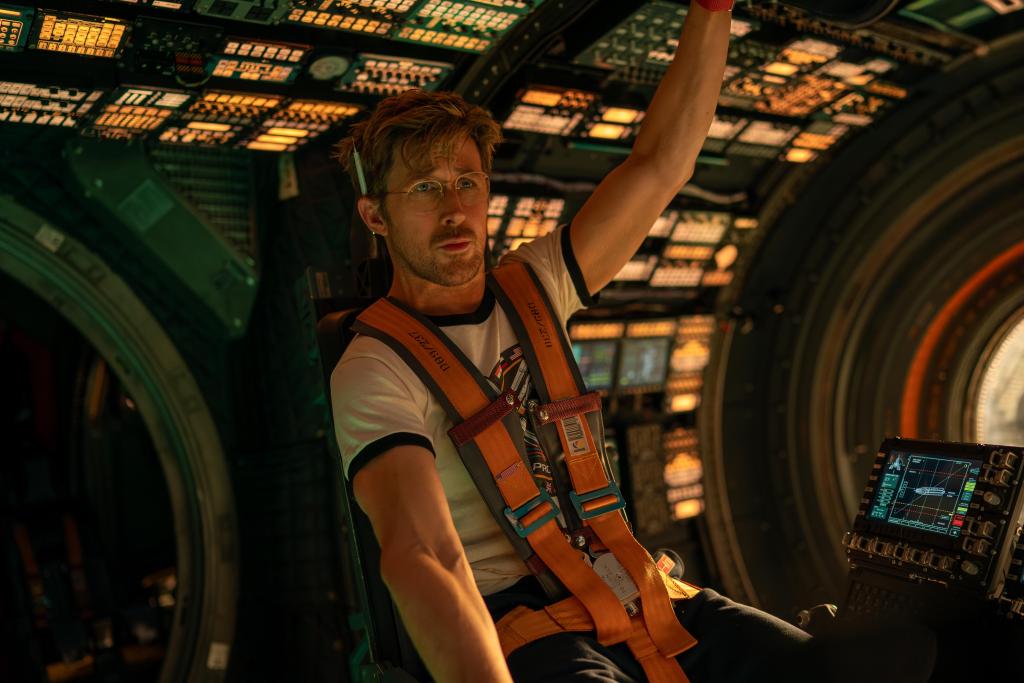
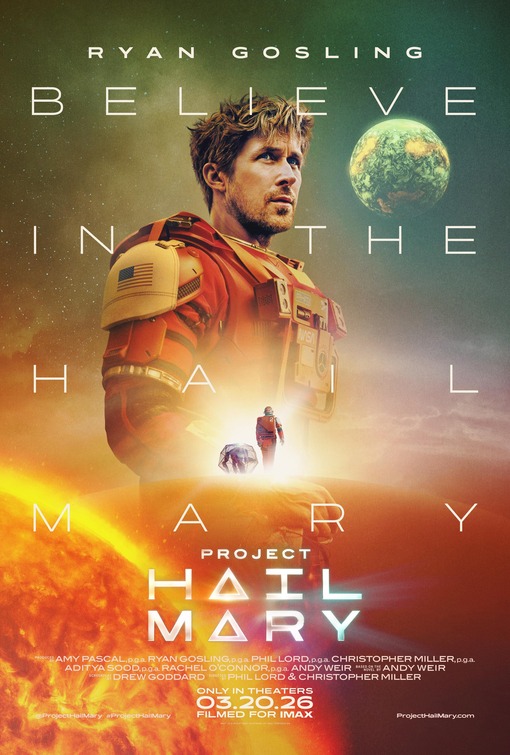
Dr. Ryland Grace (Ryan Gosling) is a once-promising molecular biologist now teaching middle school. A small but persistent distraction is that everyone refers to him by his surname, “Grace.” Given its more common use as a feminine first name, it creates a brief confusion each time it’s said. Grace is unexpectedly pulled back into the scientific world. Earth faces a slow-moving extinction event caused by a mysterious, light-devouring microorganism dimming the Sun. The formidable Eva Stratt (Sandra Hüller) recruits him to help solve the crisis. Grace becomes entangled in a desperate, global effort that leads to the launch of a last-ditch space mission toward a distant star that may hold the key to humanity’s survival. He awakens alone aboard the spacecraft with no memory of who he is or why he’s there. Grace must piece together both his identity and his mission. He forms an unexpected connection that reshapes his understanding of cooperation and what it means to save his own world and potentially another civilization.
The screenplay relies heavily on the innate decency of Ryan Gosling as its leading man. While Gosling has been compelling before, he taps into a most endearing quality here. Dr. Ryland Grace has a kind of humble, “aw-shucks” sincerity paired with the quiet confidence of someone who knows he may be the smartest person in the room. It’s a delicate balance, and not every actor could sustain it without seeming cloying. Gosling makes it effortless. In another era, this role might have gone to a young James Stewart or early-career Tom Hanks.
At its core, Project Hail Mary is a story about friendship. That idea comes into focus when Grace encounters an alien lifeform with a multi-limbed physiology that resembles something between a spider and a crustacean. He names him Rocky. The character is realized through practical effects, not CGI, with James Ortiz serving as both the voice and lead puppeteer, lending Rocky a tangible, expressive presence. Their relationship elevates the film from merely effective to pure cinema. They can’t understand each other at first, so Grace constructs a makeshift translation system to interpret Rocky’s melodic language. It requires a degree of suspension of disbelief, but the payoff more than justifies it.
The friendship that develops rivals the warmth of E.T. the Extra-Terrestrial and the intellectual curiosity of Arrival. The other influences are clear: The Martian, Gravity, and even shades of Cast Away. The connection to The Martian feels especially apt, as Drew Goddard returns to adapt another Andy Weir novel. To be fair, Hollywood has produced science fiction that inspires in the past decade: Interstellar comes to mind. What makes this work of art feel so refreshingly new is its sense of humor. This is not a solemn or brooding experience; it is bright, playful, and genuinely funny. My theater was filled with sustained laughter, creating a sense of communal joy. That unique blend provides an experience designed to leave audiences feeling better than when they arrived. It’s increasingly rare. Films like this have not disappeared entirely, but they have become exceptions rather than the norm. Project Hail Mary feels like a rediscovered mode of storytelling, and I embraced it wholeheartedly.
03-19-26