
 Rating 8/10
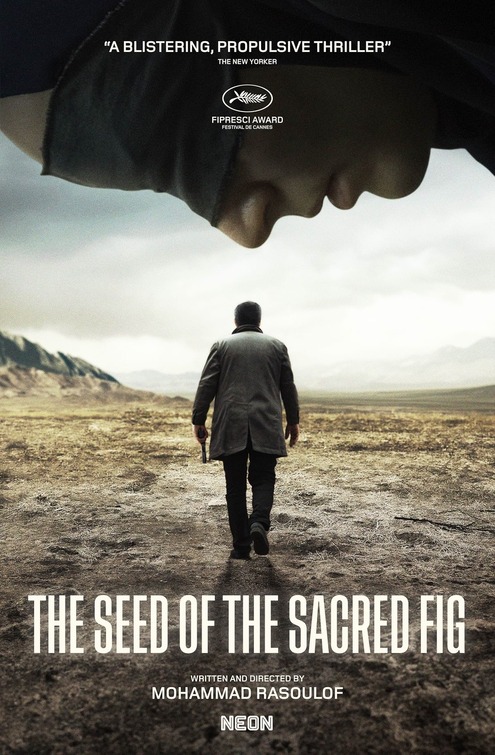
The sacred fig strangles its host tree in order to grow. Likewise, this tale explores how Iran’s theocratic regime slowly tightens its grip on those who serve it—until they, too, are suffocated. Iranian filmmaker Mohammad Rasoulof’s tense political drama follows a family coming apart under the weight of the very oppression their father upholds.
Iman (Missagh Zareh) is an honest lawyer in Tehran. He is thrilled to be promoted to an investigating judge in the Revolutionary Court. This will provide his spouse and children with financial stability and a larger home. However, this promotion requires blind obedience rather than legal scrutiny. The expectation is to approve death sentences without a thorough assessment. Nationwide demonstrations occur after a young woman dies in police custody after being arrested. Subsequently, Iman faces anxiety at work and personal conflicts at home.
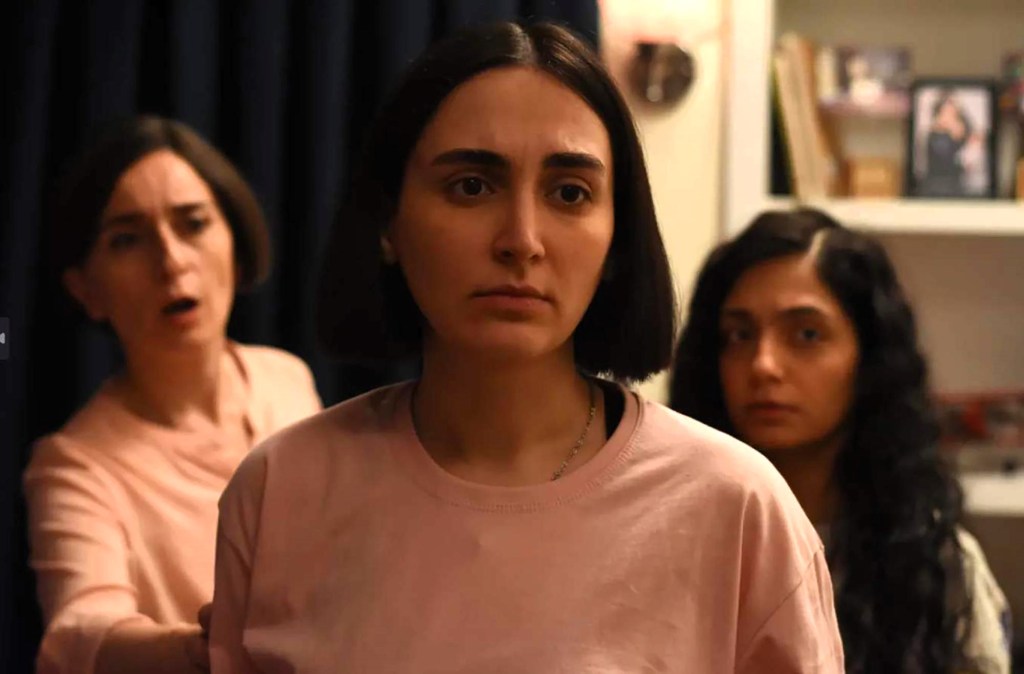
Iman’s wife, Najmeh (Soheila Golestani), and their daughters, Rezvan (Mahsa Rostami) and Sana (Setareh Maleki), are following the unfolding civic unrest. His spouse pleads to act cautiously, but his daughters are horrified by the state’s brutal clampdown on protests. They challenge their father’s complicity in the regime’s actions. Frictions escalate when Iman’s government-issued handgun mysteriously disappears, leading him to suspect someone in his own household. Iman interrogates his wife and daughters, and this suspicion causes a rift within the family.
The initial focus is on the compromises people make when they believe they have no other choice. Iman goes from a dutiful bureaucrat to a man consumed by paranoia. In the first half, Iman wrestles with the heavy responsibility of his role, while Najmeh clings to the comforts his position provides. Rasoulof captures the claustrophobic dread of living under constant surveillance. The silencing of opposing voices affects everyday life. The account interweaves real-life footage from the 2022–2023 Iranian protests, which erupted after the death of 22-year-old Mahsa Amini in police custody following her arrest for allegedly violating Iran’s mandatory hijab laws.
The second half shifts focus from Iman’s moral shame to a father confronting deception within his own home. The early tensions between his loved ones are captivating, but Iman’s descent into rage is weakened by the movie’s reliance on a melodramatic climax. The saga further taxes the viewer with a runtime of nearly 3 hours. Characters will do implausible things, which lead to a clumsy action sequence that involves a car chase and a violent confrontation. These elements weaken the narrative’s impact, but the chilling depiction of how state power and control can tear loved ones apart remains compelling.
The Seed of the Sacred Fig does a good job of depicting the effects of state tyranny on personal relationships. The fact that Rasoulof directed it in secret while still in Iran adds to the film’s subversive edge. Then, after facing an eight-year prison sentence, he fled the country. It premiered at the Cannes Film Festival in May 2024, where it was nominated for the Palme d’Or and received the Special Jury Prize. He worked with the German movie industry, which provided the necessary backing for an international release. Given that Germany had already played a key role in the film’s distribution and promotion, it was selected as the country’s official Oscar submission. It went on to become one of the five nominees for Best International Film.
Rasoulof’s exile adds an extra layer of urgency to The Seed of the Sacred Fig, which reinforces this tale of authoritarian rule. While the story stumbles in its latter half, its harrowing portrayal of a family unraveling under state oppression lingers. With a cast that includes actors with firsthand experience resisting the regime, Rasoulof’s work is both a political statement and an exciting thriller.
01-03-25