
 Rating 6/10
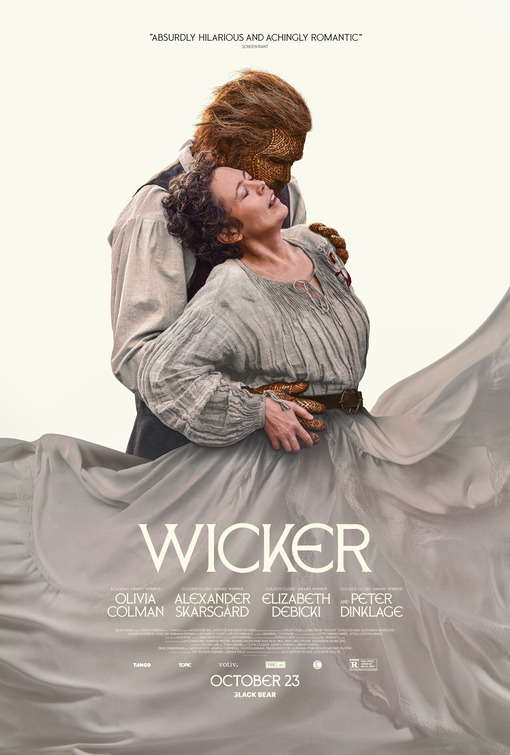
There’s something rather enchanting about Wicker. The title of this peculiar romantic fantasy, along with its central character, inevitably brings to mind Robin Hardy’s The Wicker Man. Yet this is a very different sort of fable. However, both films evoke the atmosphere of ancient folklore. The production design, musical score, and performances create a timeless atmosphere. Unfortunately, the developments never live up to the imaginative world surrounding them.
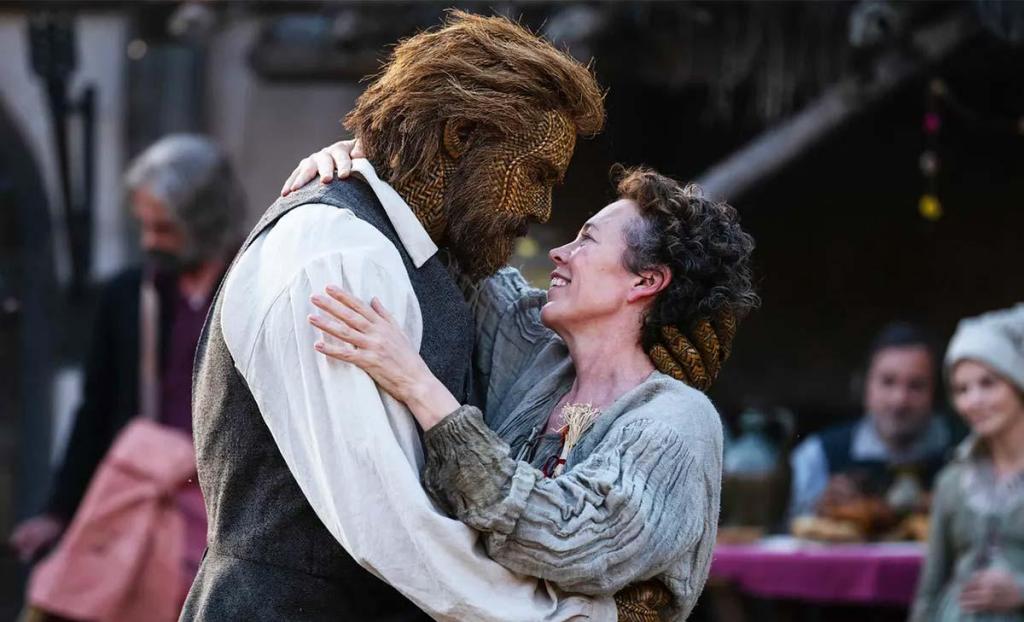
Set in a medieval English village, the premise follows a lonely, socially ostracized fisherwoman (Olivia Colman) who commissions a local basketmaker (Peter Dinklage) to fashion her a husband out of thin, flexible branches. To everyone’s surprise, her bizarre companion (Alexander Skarsgård) proves remarkably loving and devoted. You might expect such an extraordinary example of affection to motivate the villagers to be more loving in their own relationships. Instead, the couple’s happiness becomes a source of jealousy.
The account is based on Ursula Wills-Jones’s short story The Wicker Husband, a modern literary parable inspired by the author’s visit to Cornwall, England. This film remains largely faithful to the original’s themes of envy, intolerance, and social conformity. It’s an intriguing foundation, but I wish writer-directors Alex Huston Fischer and Eleanor Wilson had taken the material in a more hopeful direction.
The central conceit is an interesting idea. Yet how sad that one extraordinarily devoted husband would cause widespread resentment throughout an entire village. The townspeople’s reactions are exaggerated even within the heightened reality of a fairy tale. Things grow increasingly simplistic as their collective bitterness takes over.
What disappointed me most was the missed opportunity to explore a timeless moral truth: love begets love. Perhaps one person’s kindness can encourage goodness in others. Imagine if this unusual companion had encouraged the other men to become more affectionate and attentive toward their wives. Those women, in turn, might have responded with greater warmth and tenderness toward their husbands.
However, that isn’t the worldview presented here. Their parable aims to expose the worst in both sexes, portraying men as selfish and neglectful and women as jealous and vindictive. Sure, that’s a legitimate artistic choice, but I found their pessimistic philosophy far less compelling than the more hopeful possibilities suggested by the premise.
It’s particularly frustrating because so much of this whimsical creation works. Colman brings warmth and vulnerability to her unconventional heroine, while Skarsgård makes an inherently absurd creation surprisingly endearing. Renátó Cseh’s richly textured production design and Anna Meredith’s evocative musical score further enhance the mood.
Wicker is a beautifully crafted fantasy, but its considerable charms cannot disguise a dispiriting narrative that is underdeveloped, too. I admired the captivating world far more than the narrative constructed within it. There’s a beautiful lesson about the transformative power of love here. I just wish that message had been woven into a more deeply satisfying story.
10-29-26